The Decapitation of the Islamic Republic: What Comes After Khamenei

Thirty-seven years.
That’s how long Ali Khamenei held the Islamic Republic together, through sanctions, proxy wars, nuclear brinkmanship, and wave after wave of popular uprising. He survived an assassination attempt that cost him the use of his right arm. He survived Saddam. He survived the Green Movement, the Mahsa Amini protests, and two rounds of Israeli and American strikes on his nuclear infrastructure.
He did not survive the US/Israeli joint operation - codenamed Operation Roaring Lion by Israel and Operation Epic Fury by the United States.
In the early hours of Saturday, 28 February, a US-Israeli strike killed the Supreme Leader at his Tehran office. Not in a bunker. Not in a hardened facility. At his desk. Iranian state media confirmed his death the following morning, announcing forty days of national mourning. The Islamic Republic, the system designed to outlast any individual, has just lost the individual around whom every part of the system actually revolved.
What happens now matters enormously. Not just for Iran. For the entire architecture of regional security, and for the global order that architecture underpins.
The Decapitation Problem
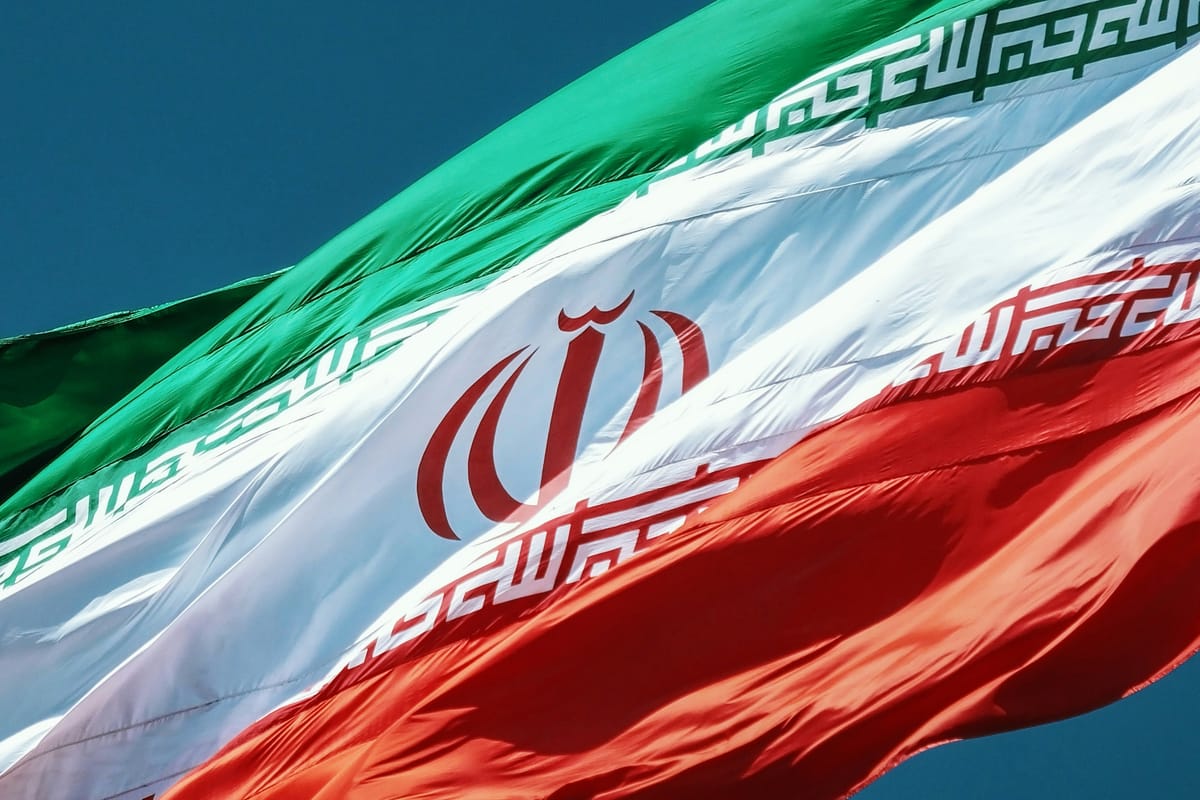
The Islamic Republic’s constitution was engineered with succession in mind. Article 111 creates an interim leadership council (the President, the head of the Judiciary, and a jurist from the Guardian Council) to hold power until the 88-member Assembly of Experts selects a new Supreme Leader. That provision was written to contain the unthinkable.
What it didn’t anticipate was an adversary who understood the Constitution well enough to try to destroy succession itself.
Israel’s opening strikes didn’t just kill Khamenei. They targeted seven senior defence and intelligence officials simultaneously, in three separate gatherings that Israeli intelligence had identified as concurrent. The military chief of staff, the defence minister, the IRGC commander: all confirmed dead. Iran has appointed Ayatollah Ali Reza Arafi to the interim council, and President Pezeshkian has declared himself safe and in charge. But continuity, as one British security analyst observed, is now something to be asserted, not assumed.
The gap between constitutional process and political reality has never been wider. Ali Larijani, the most senior civilian figure still standing, vowed an “unforgettable lesson” for Israel and America. A 99-year-old Grand Ayatollah has issued a call for jihad. The IRGC, whose chain of command has been decapitated, is simultaneously grieving, retaliating, and trying to work out who gives orders now.
That is a dangerous combination.
The Regional Explosion
Iran’s retaliation has been broad, sustained, and deliberately indiscriminate in its geography, and it is still escalating.
In Israel, ballistic missiles struck Tel Aviv city centre overnight Saturday, killing a woman in her 40s and injuring more than two dozen others, damaging two apartment buildings. Iran has now launched six successive waves of missiles and drones at Israeli territory, targeting Tel Nof airbase, the IDF military headquarters, and a defence industry complex in Tel Aviv. The Israeli military reports that dozens of missiles have been intercepted, though defence is not, in its own words, hermetic. Sirens have sounded continuously across northern and central Israel. The country has declared a special state of emergency.
Across the Gulf, the picture is just as alarming. This is not a conflict limited to Iran and Israel. Iranian missiles and drones have struck or been intercepted across Bahrain, Kuwait, Qatar, Jordan, Saudi Arabia, and the UAE. The US Navy’s Fifth Fleet headquarters in Bahrain was targeted directly. Kuwait’s Ali al-Salem Air Base came under ballistic missile attack. Saudi Arabia intercepted strikes aimed at Riyadh and Dammam. Jordan dealt with 49 drones and ballistic missiles in a single night.
In Dubai, one of the world’s most connected commercial hubs, the impact has been visceral. Debris from an intercepted Iranian missile set fires at the city’s main port and scorched the facade of the iconic Burj Al Arab hotel, as well as the Fairmont The Palm hotel, which was seen across many media reports. One person was killed in Abu Dhabi by missile shrapnel. Dubai International Airport, the world’s busiest international hub, has been closed indefinitely. More than 3,400 flights have been cancelled across seven regional airports. Global aviation, already rerouted by the war in Ukraine, is absorbing another major disruption, and this one sits astride the routes connecting Europe, Asia, and Africa.
The Strait of Hormuz, through which a third of global seaborne oil passes, is no longer just a chokepoint under threat; it is now an active combat zone. Around 150 tankers are anchored in open Gulf waters, waiting. The United Kingdom Maritime Trade Operations (UKMTO) has reported three separate incidents on 1 March alone: two vessels struck by unknown projectiles near Oman and the UAE, a third requiring crew evacuation. One fire reached the engine room before being brought under control. These are not warning shots. Iran is targeting the waterway that moves a third of the world's seaborne oil, and the economic consequences of a sustained interdiction campaign here would dwarf anything the current air war has produced.
The Iranian approach appears to be coercive in intent: strike US-allied Gulf states hard enough that their governments demand Washington stop. In practice, it appears to be backfiring. Saudi and Emirati officials have condemned Iranian strikes on their territory as unprovoked violations of sovereignty. The Crown Prince of Saudi Arabia pledged full support to the UAE. Riyadh and Abu Dhabi are now coordinating closely, their strategic outlook converging on a shared question: how to avoid further escalation and shape what comes after it.
Iran’s Foreign Minister, speaking to NBC from Tehran, said his country was interested in de-escalation and willing to talk. Trump’s response, posted on Truth Social between celebratory announcements of Khamenei’s death, was that strikes would continue “uninterrupted throughout the week, or as long as necessary.” The endgame is regime change. Trump told the Iranian people directly: “When we are finished, take over your government.” That is not a negotiating position. It's a gamble on the future of a nation.
The Nuclear Question
The IAEA has maintained, consistently, that there is no evidence Iran resumed uranium enrichment to weapons-grade levels. The US ambassador to the UN argued that military action was not about current evidence; it was about future risk. The administration’s position, stated by senior officials, was that Iran’s reconstitution efforts after last year’s nuclear strikes, combined with its refusal to discuss ballistic missiles, constituted an “intolerable risk.
Whether that calculus holds up legally or strategically is a different question. The logic is clear enough: Washington decided that the diplomatic track (nuclear talks mediated by Oman, a second round scheduled for Geneva, an offer reportedly of “free nuclear fuel forever” in exchange for ending enrichment) had run out of road.
What happens to that programme now is the most consequential unknown. Key facilities at Isfahan and Fordow have been struck. But Iran’s nuclear knowledge is not stored in buildings. And a decapitated, humiliated regime, fighting for survival under the flag of martyrdom, is not obviously less dangerous than the one that was willing to negotiate.
The Great Power Dimension
Russia’s Vladimir Putin called Khamenei’s killing a “cynical murder” and expressed condolences to Pezeshkian. China’s UN ambassador said Beijing was “very concerned” by the sudden escalation and called for immediate cessation. Neither Moscow nor Beijing will want the conflict to spiral into something that disrupts global energy markets, inflames Muslim-majority populations, or forces them into an explicit posture on a war they didn’t choose.
But both are watching something instructive. The United States just demonstrated, in the middle of Ramadan, in broad daylight, that it will kill a sitting head of state it finds inconvenient. That lesson will not be lost in Taipei, Pyongyang, or Minsk. The norm against leadership targeting - already eroded by drone warfare and targeted killing programmes - has been struck another significant blow.
For Europe, the picture is acutely uncomfortable. The EU’s Kaja Kallas called Khamenei’s death a “defining moment” and spoke of an “open path to a different Iran.” Spain’s Pedro Sánchez rejected the operation outright. Sweden said it “could open a window of opportunities” but warned of “many uncertainties.” That spectrum of response reflects exactly the incoherence that has defined European strategic autonomy for a decade. The continent has interests at stake: oil prices, refugee flows, proliferation risk, and the precedent being set for international law. It has no seat at the table where those interests are being decided.
The People Caught in the Middle
Before a single missile fell on Saturday, the Iranian people were already paying an extraordinary price.
The protests that erupted in late December 2025, the largest since the 1979 revolution, spread across all 31 provinces. What began as fury over economic collapse and a plummeting rial became something broader: a direct challenge to the legitimacy of the Islamic Republic itself.
The regime's response was brutal. Human rights groups estimate between 7,000 and 12,000 dead, the vast majority protesters shot by security forces. The government acknowledges just over 3,000 deaths. Tens of thousands more were arrested as authorities imposed a near-total internet blackout. The pattern was familiar. After the June 2025 strikes by the US and Israel, Iranian authorities detained around 21,000 people in a crackdown they framed as a response to foreign-backed subversion. External military pressure has always given the regime a pretext to turn inward.
That framing matters. The regime has consistently weaponised foreign military action as justification for internal repression, labelling protesters as “agents of the United States and Israel,” using the strikes as evidence that dissent is not genuine but orchestrated from abroad. It is a tactic designed to increase security forces’ willingness to shoot their own people. And it has worked before.
Now the same dynamic is playing out again, at far greater intensity. Iran’s internet is down almost completely - 99% offline according to network monitors. Communications are cut. The bombs falling on Tehran are not falling on empty facilities. It was reported that more than 100 children were killed in a strike on a school in the southern city of Minab. The Iranian Red Crescent reports over 200 civilian deaths from the first day of strikes alone.
Some Iranians have celebrated. The scenes of people cheering from rooftops in Tehran and of diaspora communities gathering outside Iranian embassies and other locations are real and matter. Reports from inside Tehran describe residents who have protested against the regime expressing cautious hope, storing food, waiting, more optimistic than they were during last June's 12-day war. But hope inside a city being bombed, with no internet and no way to organise, is a fragile thing.
But hope is not a strategy. And the population now faces a compounding trap. If the IRGC consolidates power in the aftermath, which the CIA assessed as the most likely outcome in its pre-strike analysis, the first order of business for a security apparatus fighting for its survival will be to eliminate internal threats. The celebrations on rooftops, the images shared on social media, the phone calls made to foreign journalists: all of these will be noted and catalogued once communications are restored. It happened after the protests. It happened in June 2025, and there is no reason to expect a different outcome from a more radicalised, more desperate successor regime - if it survives.
Trump is urging Iranians to rise up while the bombs are still falling. That is a demand being made of people who have already been shot at in their thousands, arrested in their tens of thousands, and who now have no internet, no reliable information, and no way to coordinate. The opposition is fragmented. There is no organised leadership structure capable of channelling popular rage into a viable political alternative.
The French foreign minister said it plainly: the Iranian people “must not pay the price for their government’s choices.” The uncomfortable reality is that, in every scenario currently on the table, they will almost certainly.
What Comes Next
Three scenarios are now in play simultaneously, and they are not mutually exclusive.
First, accelerated collapse. The IRGC is leaderless, the succession process is contested, and segments of the Iranian population may seize the moment that Trump is banking on. It has happened before that decapitation creates an opening. It has also frequently created martyrs.
Second, and perhaps most likely based on intelligence assessments available before the strikes, IRGC consolidation. The CIA reportedly assessed in the two weeks prior to the operation that even if Khamenei was killed, he would likely be replaced by hardline figures from within the Revolutionary Guard. The IRGC is not merely a military force - it is an economic empire and a parallel state. Without a supreme leader and without a clear clerical successor capable of commanding consensus, the Guards hold the guns, the missiles, and the money. An Iran governed by IRGC hardliners rather than clerical pragmatists would be less ideologically coherent and potentially more unpredictable. It would also be considerably more opaque, more militarised, and significantly less susceptible to the kind of popular pressure Trump is banking on.
Third, a protracted conflict with no resolution. Iran continues to strike US and Israeli targets. The US continues striking Iranian infrastructure. The region absorbs more instability. The Strait of Hormuz becomes an economic pressure point. Proxy networks in Iraq, Yemen, and Lebanon activate in ways that are difficult to predict or contain. The world watches oil prices and waits.
The UN Security Council has met in emergency session. António Guterres said a chance for diplomacy was “squandered.” He is right that it was squandered, though reasonable people will disagree about by whom.
The Question Nobody Is Asking
There is a question that gets lost in the tactical analysis of this week’s strikes, and it is the strategic one: was the Islamic Republic the problem, or was it a symptom?
Iran’s behaviour, its proxy networks, its nuclear programme, and its support for groups across the Levant emerged from a specific political economy and a specific security logic. Remove Khamenei. Remove the clerical structure. Replace it with something new. The pressures that created Iranian strategic behaviour (geography, history, sanctions, encirclement, the memory of the 1953 coup) do not go away.
Nation-building through aerial bombardment has a troubled track record. So does regime change by external force more broadly, as actions against Venezuela demonstrated just weeks ago, when the Trump administration extracted Nicolás Maduro in a military operation that achieved its immediate objective while leaving the country's underlying political crisis entirely unresolved. The Trump administration knows the history, and has bet that Iran is different: that the regime lacks popular legitimacy, that the conditions for internal change are ripe, that this time the people will be ready.
Perhaps they’re right. The scenes of celebration in Tehran were real. So were the scenes from Baghdad in 2003.
But the CIA’s own pre-strike assessment points to a more sobering possibility, that removing the cleric at the top may simply accelerate the militarisation of what replaces him. And a militarised, hardline successor state, born in crisis, flush with grievance, and still in possession of advanced ballistic missiles and nuclear knowledge, is not obviously a safer outcome than the one the operation set out to dismantle.
Strategic stability is not built on hope. It is built on structure, incentives, and the patient management of interests that do not simply disappear when a Supreme Leader is killed.
The Islamic Republic may be finished. The security challenges it represented may not be.