
Nuclear
The Last Patrol
The United Kingdom has maintained a continuous at-sea deterrent (CASD) since 1969, code-named Operation Relentless, meaning at least one nuclear-armed submarine is always on patrol, hidden in the world's oceans.

Nuclear
The United Kingdom has maintained a continuous at-sea deterrent (CASD) since 1969, code-named Operation Relentless, meaning at least one nuclear-armed submarine is always on patrol, hidden in the world's oceans.
Space
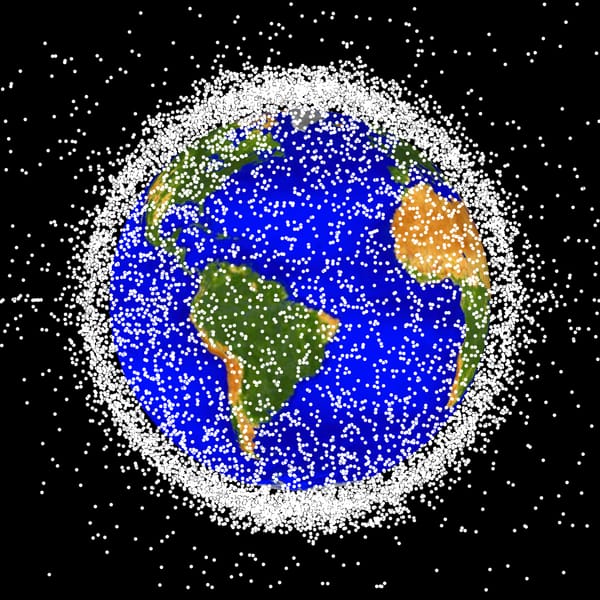
On a clear night, a speck of paint from a decommissioned satellite can still be hurtling towards the next generation of Earth-orbiting technology at more than 10 kilometres per second. With over 11,000 active satellites currently circling Earth and more than 1.2 million pieces of space debris larger

Thought Leader
The sky has changed, but our security playbooks have not. Satellites now underpin navigation, finance, logistics, media, and military operations. They are no longer rare, government-only assets. They are cloud-connected, software-defined, and commercially operated at scale. Yet much of cybersecurity still treats space as exotic and separate, a future problem

The first sign was not a missile launch, but a picture. At 06:42 Taipei time, a high‑resolution satellite image surfaced on a public imagery feed: a line of grey hulls pushing east from the Chinese coast, wakes cutting clean V‑shapes through the strait. Amateur analysts on X

Nuclear
Once, nuclear war haunted films, protests, and public imagination. Today, the fear has faded—but the threat hasn’t. This piece explores how we lost our nuclear anxiety, why that might be dangerous, and what we stand to forget if we stop paying attention.
Swarm Book
Orbits of Power: From Sputnik to Starlink © Jay Allen 2025 “It wasn’t the beep that scared them. It was the orbit.” On 4 October 1957, a polished metal sphere the size of a beach ball lifted off from the Baikonur Cosmodrome in Kazakhstan. It weighed just 83 kilograms and
Swarm Book
The Sky is Full © Jay Allen 2025 Above Ukraine, the Future Arrived Early In the opening days of Russia’s full-scale invasion of Ukraine in February 2022, the war appeared to follow a familiar script. Tanks breached borders. Missiles rained on cities. Airstrikes lit the skies over Kyiv. Yet high
Musings
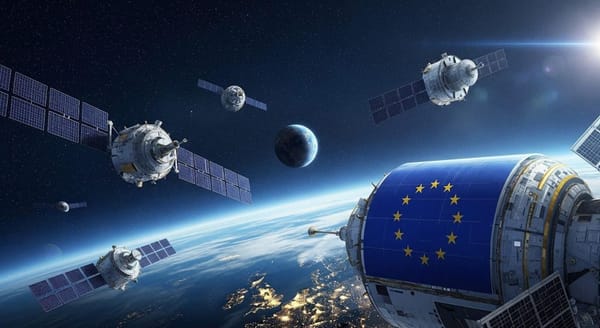
On June 20th, 2025, the European Commission quietly released a draft regulation that is one of the most geopolitically consequential documents of the year. Titled the EU Space Act, it mandates new cybersecurity, resilience, and environmental standards for all space systems operating within the Union. On the surface, it appears
Security
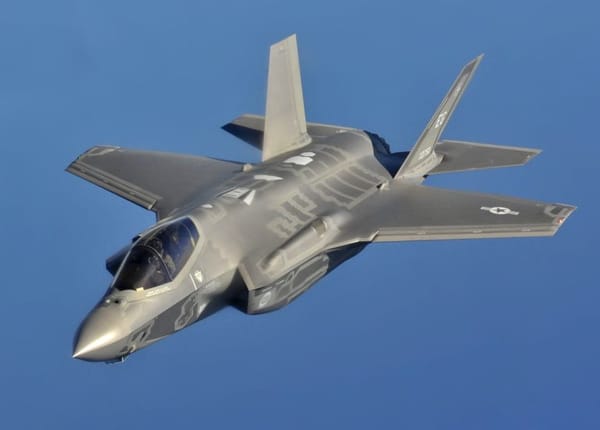
The UK’s announcement that it will procure F-35A Lightning II jets and formally commit to NATO’s nuclear sharing mission marks a subtle but significant shift in its approach to deterrence, escalation, and alliance solidarity. After years of strategic ambiguity and a doctrine that placed Trident as the singular
Musings
@jayallen.pro [Bluesky] | LinkedIn As the United Kingdom enters a new era of strategic competition, marked by the resurgence of great power rivalry, the weaponisation of space and cyberspace, and the erosion of arms control norms, questions about how the UK manages escalation and deterrence are becoming more urgent. The
AI
I’d just finished watching Dr. Strangelove or: How I Learned to Stop Worrying and Love the Bomb when the idea for this blog struck me. Kubrick’s absurd, satirical take on Cold War nuclear brinkmanship felt eerily relevant, not because we’re on the edge of nuclear war, but

AI
Organisations face an unprecedented challenge in the rapidly evolving digital landscape: balancing artificial intelligence’s (AI) transformative potential with the fundamental need to secure identity and access management (IAM) systems. As we integrate AI more deeply into our security infrastructure, we must confront the remarkable opportunities and the sobering risks